

What Is the Reggio Emilia Approach—and How Does It Benefit Preschoolers?
When exploring preschool options in Singapore, parents are often met with a dizzying array of educational philosophies. Among them, the Reggio Emilia approach has steadily become one of the most sought-after frameworks for early childhood education.
But what exactly is it, and why is it so beneficial for young children?
Originating in Italy, the Reggio Emilia philosophy is built on a profound respect for children. It views every child as strong, capable, and full of wonder. Rather than treating children as empty vessels waiting to be filled with facts, this approach recognises that children are born investigators.
Here is a breakdown of the core pillars of the Reggio Emilia approach and how they actively benefit your preschooler’s development.
Child-Led Inquiry: Fostering Genuine Curiosity
In traditional classrooms, learning is often top-down: the teacher decides what will be learned that day, and the children sit and listen. The Reggio approach flips this dynamic.
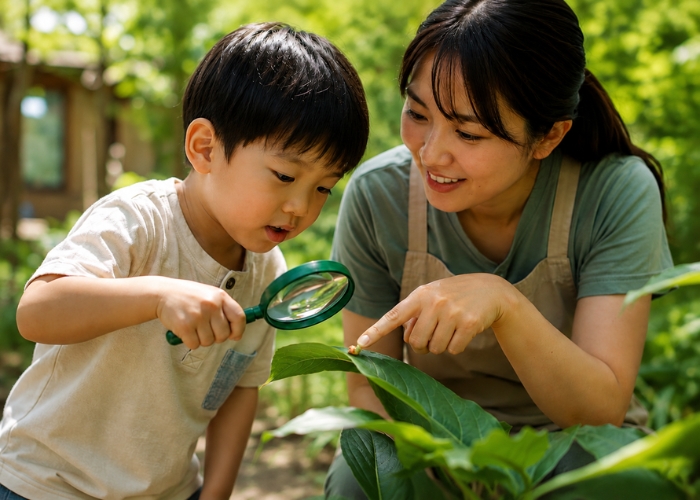
Through child-led inquiry, teachers closely observe the children to understand their current interests and questions. If a child finds a fascinating leaf in the garden and asks why it’s changing color, that question isn’t brushed aside—it becomes the curriculum.
- The Benefit: When children are genuinely interested in a topic, their engagement skyrockets. They learn how to ask questions, seek answers, and develop a lifelong love for learning, rather than just memorising information for a test.
Project-Based Learning: Deepening Understanding
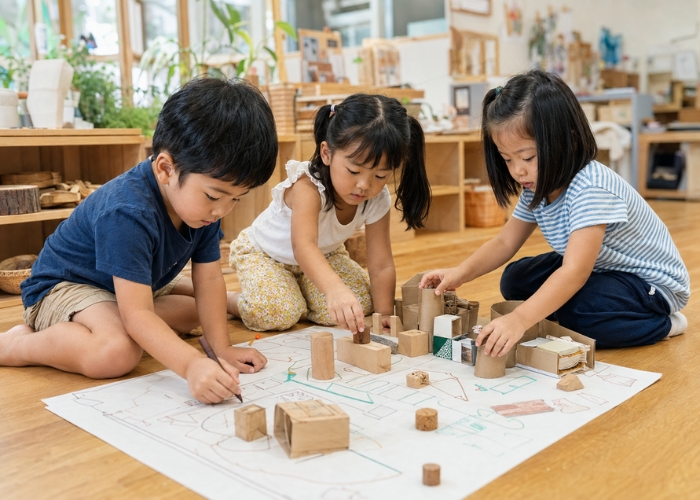
Child-led inquiry naturally evolves into project-based learning. Instead of 15-minute isolated lessons on shapes or colors, teachers turn the children’s real questions into comprehensive projects that can last for days or even weeks.
For example, an interest in building blocks might evolve into a multi-week project about architecture, where children draw blueprints, test materials, and collaborate to build a model city.
- The Benefit: This teaches critical thinking, problem-solving, and teamwork. Children learn how to see a task through from the initial idea to the final result, building immense resilience and focus along the way.
Creative Expression: The “Hundred Languages” of Children

A famous concept within Reggio Emilia is the “Hundred Languages of Children.” It is the belief that children use many different ways to express their understanding, creativity, and thoughts.
Writing and speaking are just two of these languages. The others include drawing, sculpting, dramatic play, music, and movement. In a Reggio-inspired classroom, you will see children expressing their ideas through paint, clay, light, and “loose parts” (open-ended materials like pebbles, buttons, or twigs).
- The Benefit: This holistic approach to expression ensures that every child finds their voice. It builds fine motor skills, nurtures creativity, and gives children the confidence to communicate complex emotions and ideas before they can fully write them down.
The Environment as the “Third Teacher”
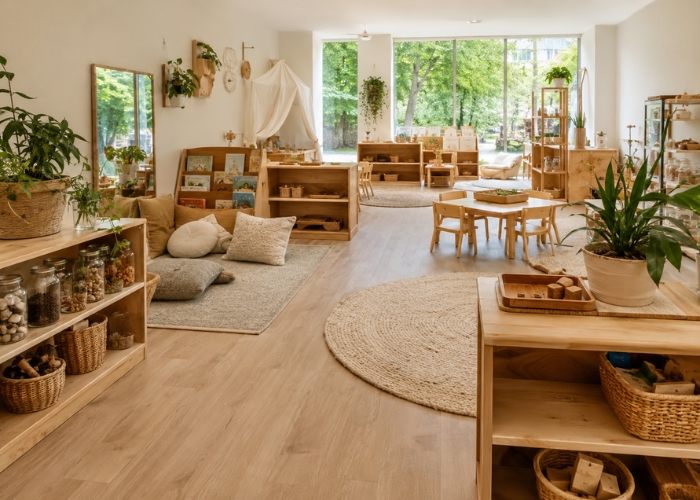
In the Reggio philosophy, parents are the first teachers, educators are the second, and the environment is the third teacher.
A Reggio classroom looks very different from a standard preschool. It is intentionally designed to be beautiful, calming, and inspiring. You won’t find walls plastered with loud, commercial posters. Instead, you will find natural light, wooden furniture, indoor plants, and carefully organised materials that invite exploration. Furthermore, the outdoors—such as gardens and mud kitchens—are treated as essential extensions of the classroom.
- The Benefit: A well-designed environment promotes calmness and focus. Open-air games, gardening, and sensory play with water and sand build physical coordination and ground the children in the real world.
Experiencing Reggio Emilia at Pegasus International Preschool
Reading about the Reggio Emilia approach is inspiring, but seeing it in action is truly magical. At Pegasus International Preschool (PIPS) in Novena, this philosophy is woven into every aspect of the day for children aged 18 months to 6 years.
Designed specifically for families building a life in Singapore, Pegasus combines the wonder of Reggio Emilia with a unique trilingual immersion program (English, Chinese, and Japanese). With incredibly low teacher-to-child ratios, educators have the time and space to truly follow your child’s curiosity. From the outdoor mud kitchen to the beautifully equipped art ateliers, Pegasus turns natural wonder into real growth.
Ready to see the Reggio Emilia approach in person? Give your child an early childhood experience that nurtures confidence, curiosity, and multilingual growth. Book a personalised tour at Pegasus International Preschool today and discover a place where your child will truly feel at home.